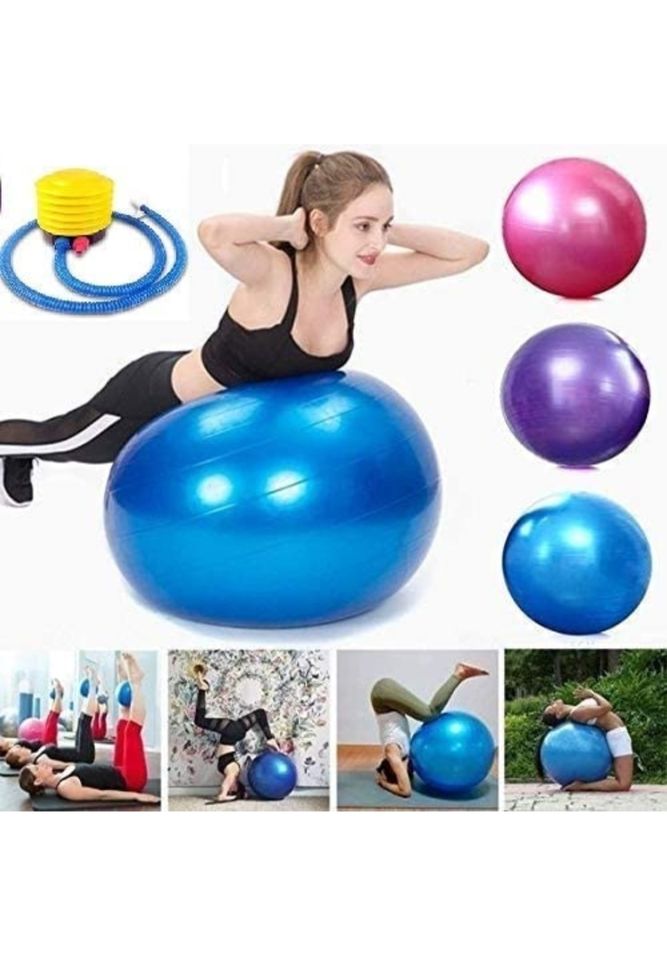
Professional Gym Ball (Swiss Ball) for Physiotherapy, Rehabilitation & Core Strength
₹999
The Gym Ball, also known as a Swiss Ball, Exercise
Ball, Stability Ball, or Physio Ball, is one of
the most effective rehabilitation and fitness tools used by physiotherapists, orthopedic
specialists, sports trainers, chiropractors, and rehabilitation professionals worldwide.
Designed to improve core stability, posture, flexibility, balance, coordination, and muscle
strength, the Gym Ball has become an essential piece of equipment in modern physiotherapy
clinics, hospitals, gyms, rehabilitation centres, and home exercise programs.
Unlike conventional exercise equipment that provides a stable surface, the Gym Ball creates
controlled instability. This instability forces your body to activate deep stabilizing muscles
throughout every movement. As a result, even simple sitting or stretching exercises engage the
abdominal muscles, lower back, hips, shoulders, and pelvic muscles simultaneously, improving
overall functional strength and body control.
Our premium-quality Gym Ball is manufactured using heavy-duty anti-burst PVC material that
offers exceptional durability and safety. Even under high pressure, the ball slowly deflates
rather than bursting suddenly, making it ideal for rehabilitation patients, elderly users,
pregnant women, athletes, and beginners. The textured slip-resistant surface provides additional
grip during exercises, reducing the risk of slipping while improving exercise confidence.
Physiotherapists frequently recommend Gym Ball exercises for patients recovering from back pain,
neck pain, shoulder injuries, knee rehabilitation, sports injuries, neurological conditions,
post-operative recovery, arthritis, scoliosis, and posture-related problems. The Gym Ball allows
patients to perform low-impact exercises that strengthen muscles without placing excessive
stress on joints.
Whether you are looking to strengthen your core, improve posture, increase flexibility, reduce
chronic back pain, recover after injury, or enhance sports performance, the Strength Physio Gym
Ball provides a reliable and effective solution suitable for both professional clinical use and
home rehabilitation.
A Gym Ball, commonly known as a Swiss Ball, Exercise
Ball, Stability Ball, or Physio Ball, is a large inflatable
rehabilitation and fitness ball designed to improve balance, posture, flexibility, coordination, and muscle
strength. Originally developed in Switzerland for neurological rehabilitation, the Gym Ball has become one
of the most widely used physiotherapy tools across hospitals, rehabilitation centres, sports clinics,
fitness studios, and home exercise programs worldwide.
The Gym Ball provides an unstable surface that requires continuous muscle activation to maintain balance.
Unlike traditional exercise equipment that isolates specific muscles, Gym Ball exercises engage multiple
muscle groups simultaneously. This makes it highly effective for strengthening the abdominal muscles, lower
back, hips, shoulders, pelvic floor, and spinal stabilizers.
Today, physiotherapists recommend Gym Balls for patients recovering from orthopedic injuries, spinal
disorders, neurological conditions, sports injuries, post-operative rehabilitation, and chronic
musculoskeletal pain. Fitness professionals also use Gym Balls for Pilates, yoga, functional training,
flexibility improvement, and athletic conditioning.
How Does a Gym Ball Work?
The effectiveness of a Gym Ball comes from its unstable and flexible surface. Whenever a person sits, lies,
kneels, or performs exercises on the ball, the body naturally activates small stabilizing muscles to
maintain balance. These muscles continuously make tiny adjustments to keep the body stable throughout every
movement.
This automatic muscle activation improves neuromuscular coordination while strengthening muscles that are
often neglected during conventional strength training. As balance improves, patients develop better posture,
stronger core muscles, improved spinal alignment, and enhanced body control.
Unlike high-impact exercises that place stress on joints, Gym Ball exercises provide smooth, controlled
movement that is suitable for people of all ages. Elderly individuals, rehabilitation patients, pregnant
women, athletes, and beginners can all benefit from Gym Ball training because it offers effective
strengthening with minimal joint stress.
Benefits of Using a Gym Ball
The Gym Ball offers numerous physical and rehabilitation benefits, making it one of the most valuable pieces
of equipment in physiotherapy and fitness. Regular use improves muscular endurance, joint stability,
posture, flexibility, coordination, and overall physical performance.
Improves core muscle strength.
Enhances body balance and stability.
Corrects poor posture.
Reduces lower back pain.
Strengthens abdominal muscles.
Improves spinal alignment.
Increases flexibility.
Supports rehabilitation after injury.
Improves coordination and body control.
Enhances athletic performance.
Safe low-impact exercise option.
Suitable for all age groups.
Gym Ball for Physiotherapy
Modern physiotherapy clinics extensively use Gym Balls during rehabilitation because they help patients
regain strength without placing excessive pressure on healing joints. Physiotherapists carefully select
exercises according to each patient's condition, gradually increasing difficulty as recovery progresses.
Gym Ball therapy is commonly recommended for patients suffering from chronic back pain, cervical pain,
frozen shoulder, stroke rehabilitation, knee injuries, hip replacement recovery, neurological disorders,
arthritis, scoliosis, ligament injuries, and muscle weakness.
Because every movement performed on the Gym Ball requires controlled balance, rehabilitation becomes more
functional and closely resembles everyday activities. This improves confidence while reducing the risk of
future injuries.
Gym Ball for Core Strengthening
One of the primary reasons people use a Gym Ball is to develop a stronger core. The core includes the
abdominal muscles, lower back muscles, diaphragm, pelvic floor, and deep spinal stabilizers. These muscles
are responsible for maintaining posture, protecting the spine, and supporting almost every movement
performed during daily life.
Exercises such as Ball Crunches, Planks, Bridges, Wall Squats, Hip Raises, and Seated Balance Drills
activate multiple core muscles simultaneously. This results in greater muscle endurance, improved posture,
and reduced spinal stress.
A stronger core also improves sports performance by increasing power transfer between the upper and lower
body while reducing the likelihood of muscle injuries.
Gym Ball for Back Pain Relief
Back pain is one of the most common reasons physiotherapists recommend Gym Ball exercises. Weak abdominal
muscles, prolonged sitting, poor posture, and reduced spinal mobility often contribute to chronic lower back
pain.
Gentle stretching and strengthening exercises performed on a Gym Ball improve spinal flexibility while
reducing excessive pressure on the lumbar spine. As core muscles become stronger, they provide better
support to the vertebral column, reducing pain and improving posture over time.
Many rehabilitation programs combine Gym Ball exercises with manual therapy, stretching, strengthening, and
posture correction to achieve long-term relief from back pain.
Medical Applications of a Gym Ball
A Gym Ball is not only a fitness accessory but also an important rehabilitation tool used in hospitals,
physiotherapy clinics, sports medicine centres, and neurological rehabilitation departments. Healthcare
professionals recommend Gym Ball exercises because they provide controlled, low-impact movements that
improve strength, flexibility, coordination, and balance while minimizing stress on the joints.
Today, Gym Balls are commonly used in orthopedic rehabilitation, neurological recovery, pediatric
physiotherapy, geriatric rehabilitation, prenatal care, sports injury management, and post-operative
exercise programs. Their versatility allows therapists to design customized rehabilitation programs
according to the patient's age, medical condition, and recovery stage.
Conditions Where Gym Ball Exercises are Recommended
Chronic Lower Back Pain
Neck Pain Rehabilitation
Frozen Shoulder
Postural Correction
Scoliosis Management
Sports Injury Rehabilitation
Knee Rehabilitation
Hip Replacement Recovery
Stroke Rehabilitation
Parkinson's Disease Therapy
Multiple Sclerosis Rehabilitation
Balance Disorders
Muscle Weakness
Arthritis Exercise Programs
General Fitness Training
Gym Ball for Neurological Rehabilitation
Neurological rehabilitation focuses on improving muscle coordination, balance, body awareness, and
functional movement after conditions such as stroke, spinal cord injuries, traumatic brain injuries,
Parkinson's disease, and multiple sclerosis. Because the Gym Ball creates controlled instability, it
encourages patients to activate deep stabilizing muscles while improving neuromuscular control.
Physiotherapists often use seated balance exercises, pelvic tilts, trunk rotations, reaching activities, and
controlled weight-shifting exercises on the Gym Ball to improve coordination, sitting balance, posture, and
confidence in neurological patients.
Gym Ball for Sports Injury Rehabilitation
Athletes frequently use Gym Balls during rehabilitation because they help restore strength without placing
excessive pressure on healing tissues. Functional exercises performed on an unstable surface improve joint
stability while preparing the athlete to safely return to sports activities.
Sports physiotherapists commonly prescribe Gym Ball exercises after ligament injuries, muscle strains, ankle
sprains, ACL reconstruction, shoulder injuries, and lower back pain. These exercises gradually improve
balance, coordination, muscular endurance, and overall athletic performance.
Gym Ball During Pregnancy
Gym Balls are widely recommended during pregnancy because they provide gentle support while reducing
pressure on the lower back and pelvis. Many prenatal exercise programs include Gym Ball stretching, pelvic
mobility exercises, breathing exercises, and posture correction techniques that improve comfort throughout
pregnancy.
Regular Gym Ball exercises may help reduce lower back discomfort, improve pelvic flexibility, promote better
posture, and prepare expectant mothers for childbirth. However, all prenatal exercise programs should be
performed under the supervision of a qualified healthcare professional.
Balance and Stability Training
Balance is essential for everyday activities such as walking, climbing stairs, lifting objects, and
participating in sports. Poor balance increases the risk of falls, particularly in elderly individuals and
neurological patients.
Gym Ball exercises challenge the body's balance system by requiring continuous postural adjustments. Over
time, these exercises improve muscle coordination, joint stability, reaction time, and overall body control,
reducing the likelihood of falls and injuries.
Flexibility and Mobility Improvement
Flexibility is another major benefit of Gym Ball training. Stretching exercises performed on the ball allow
muscles to relax while increasing joint mobility. Physiotherapists often use the Gym Ball to improve
flexibility in the hamstrings, hip flexors, lower back, shoulders, chest, and spine.
Improved flexibility enhances movement efficiency, reduces muscle tightness, improves posture, and decreases
the risk of sports injuries and muscle strains.
Popular Gym Ball Exercises
Ball Crunches
Wall Squats
Bridge Exercise
Plank on Gym Ball
Back Extension
Pelvic Tilt Exercise
Seated Balance Training
Hamstring Stretch
Hip Mobility Exercise
Shoulder Stability Exercise
Push-Ups on Gym Ball
Bird Dog Exercise
Advantages of Using a Gym Ball
Improves Functional Strength
Enhances Joint Stability
Promotes Better Posture
Strengthens Deep Core Muscles
Supports Rehabilitation Programs
Suitable for Home and Clinical Use
Lightweight and Portable
Easy to Clean and Maintain
Durable Anti-Burst Construction
Suitable for All Age Groups
Frequently Asked Questions (FAQs)
1. What is a Gym Ball used for?
A Gym Ball is used for physiotherapy, rehabilitation, core strengthening, posture correction, balance
training, flexibility improvement, yoga, Pilates, and general fitness exercises. It helps improve muscle
coordination while reducing stress on the joints.
2. Is a Gym Ball good for back pain?
Yes. Physiotherapists commonly recommend Gym Ball exercises for chronic lower back pain because they
strengthen the core muscles, improve spinal alignment, increase flexibility, and reduce pressure on the
lumbar spine.
3. Can beginners use a Gym Ball?
Absolutely. Gym Balls are suitable for beginners, adults, elderly individuals, athletes, and rehabilitation
patients. Beginners should start with simple balance and posture exercises before progressing to advanced
movements.
4. Which size Gym Ball should I choose?
The ideal Gym Ball size depends on the user's height. Generally, 55 cm is suitable for people between 5'0"
and 5'5", 65 cm for heights between 5'6" and 6'0", and 75 cm for taller individuals above 6 feet.
5. Can Gym Ball exercises improve posture?
Yes. Regular Gym Ball exercises strengthen the muscles that support the spine, shoulders, and pelvis,
helping improve posture and reducing slouching caused by prolonged sitting.
6. Is the Gym Ball safe?
Yes. Our Strength Physio Gym Ball is manufactured using premium anti-burst PVC material with a
slip-resistant surface, ensuring maximum safety during physiotherapy and fitness exercises.
7. Can pregnant women use a Gym Ball?
Yes. Gym Balls are widely used during pregnancy for gentle stretching, pelvic mobility, posture improvement,
and lower back pain relief. Exercises should always be performed under the supervision of a qualified
healthcare professional.
8. Is a Gym Ball suitable for physiotherapy clinics?
Yes. Gym Balls are one of the most commonly used rehabilitation tools in physiotherapy clinics because they
support orthopedic rehabilitation, neurological therapy, balance training, posture correction, and
functional strengthening.
9. Does using a Gym Ball strengthen abdominal muscles?
Yes. Since every movement performed on a Gym Ball requires balance, the abdominal and deep core muscles
remain continuously active, making it highly effective for strengthening the core.
10. How long does a Gym Ball last?
A high-quality anti-burst Gym Ball can last for several years with proper care, correct inflation, and
regular cleaning. Avoid placing it on sharp surfaces to maximize its lifespan.
Why Choose Strength Physio?
Strength Physio is one of India's trusted manufacturers and suppliers of professional physiotherapy and
rehabilitation equipment. We provide premium-quality products designed for hospitals, physiotherapy clinics,
rehabilitation centres, sports medicine facilities, gyms, fitness studios, and healthcare professionals
across India.
The Gym Ball is one of the most effective and versatile rehabilitation tools available for physiotherapy,
fitness, and functional training. Its unique unstable surface activates deep stabilizing muscles, helping
improve balance, posture, flexibility, coordination, and overall body strength. Whether used in
rehabilitation after injury or as part of a daily fitness routine, the Gym Ball delivers outstanding results
for people of all ages.
At Strength Physio, we manufacture high-quality anti-burst Gym Balls that meet professional
standards for physiotherapy clinics, hospitals, rehabilitation centres, fitness studios, and home users.
Built for durability, safety, and long-lasting performance, our Gym Balls are designed to support effective
rehabilitation and improve overall physical well-being.
Need Expert Guidance?
Call Now:
9717698343
7669988807
Contact Strength Physio for product details, pricing, bulk orders, and expert assistance in selecting the
right rehabilitation equipment for your clinic, hospital, gym, or home.